Hi everyone! My name is Maria Lipina. I'm a photographer working in fantasy, fairy tale and gothic styles, with 17 years in the profession and an audience of 120,000 on Instagram. I live in Moscow and shoot all over the world: in Russia, Italy, Greece, Brazil and France. My work has been shown at exhibitions, and my reels collect hundreds of thousands of views.
In this article I want to talk about one of the main reasons, in my view, why people are drawn to my pictures, and about one of the main rules of any work of art: conflict, and how I use it.
First, let's agree on the term. What is conflict in a photograph, a painting or a film? Here are the kinds of conflict I work with.
1. Conflict of meaning
This is literally two different forces facing each other. It doesn't have to be a fight: it can just as well be attraction or union. A bright knight and a monster, a brave child and a band of robbers, an angel and a demon, a woman and a man, nature and machines. Classic literature is full of them: Goethe's Faust and Mephistopheles, Melville's Ahab and Moby Dick, Chatsky against society in Griboyedov's Woe from Wit.
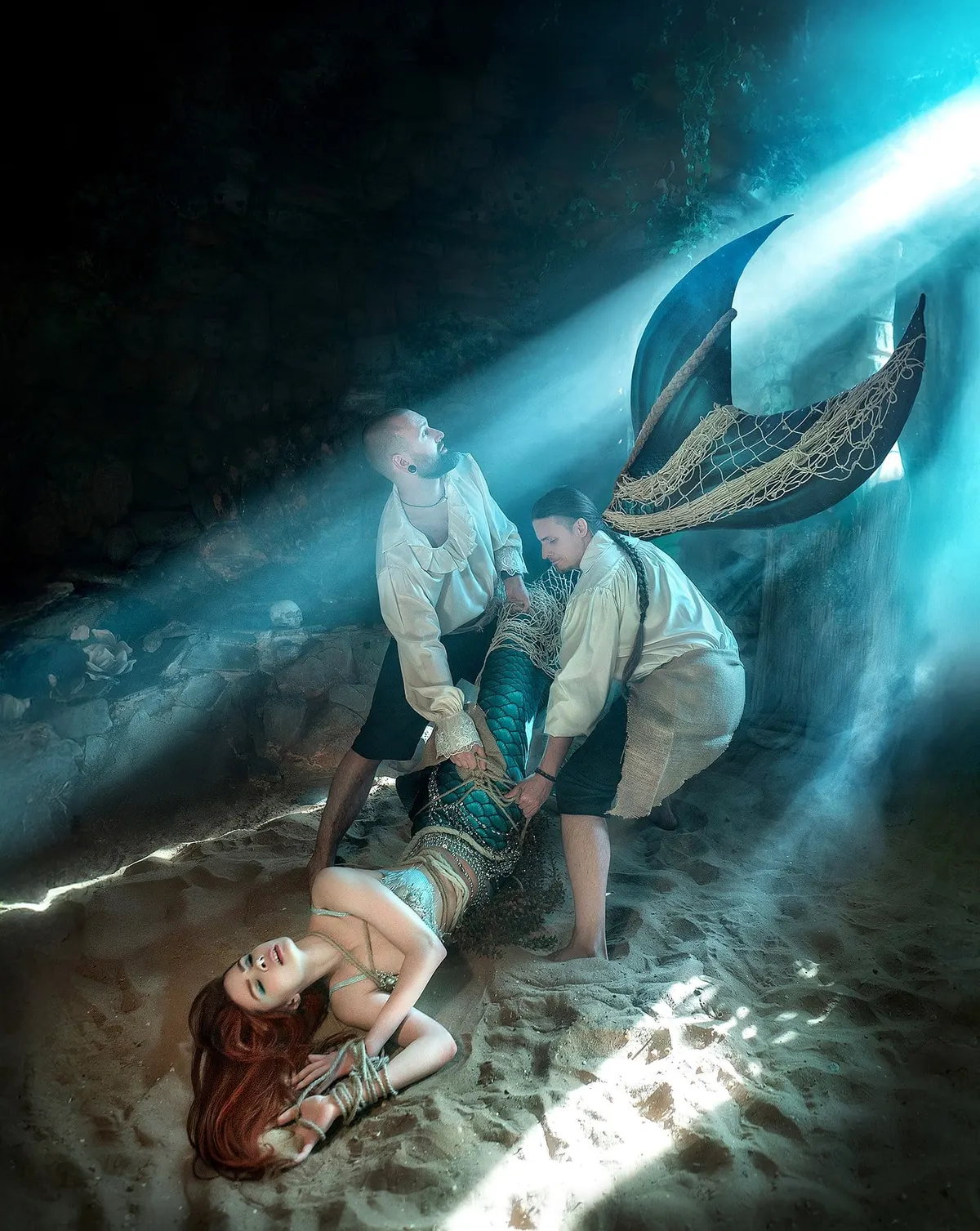
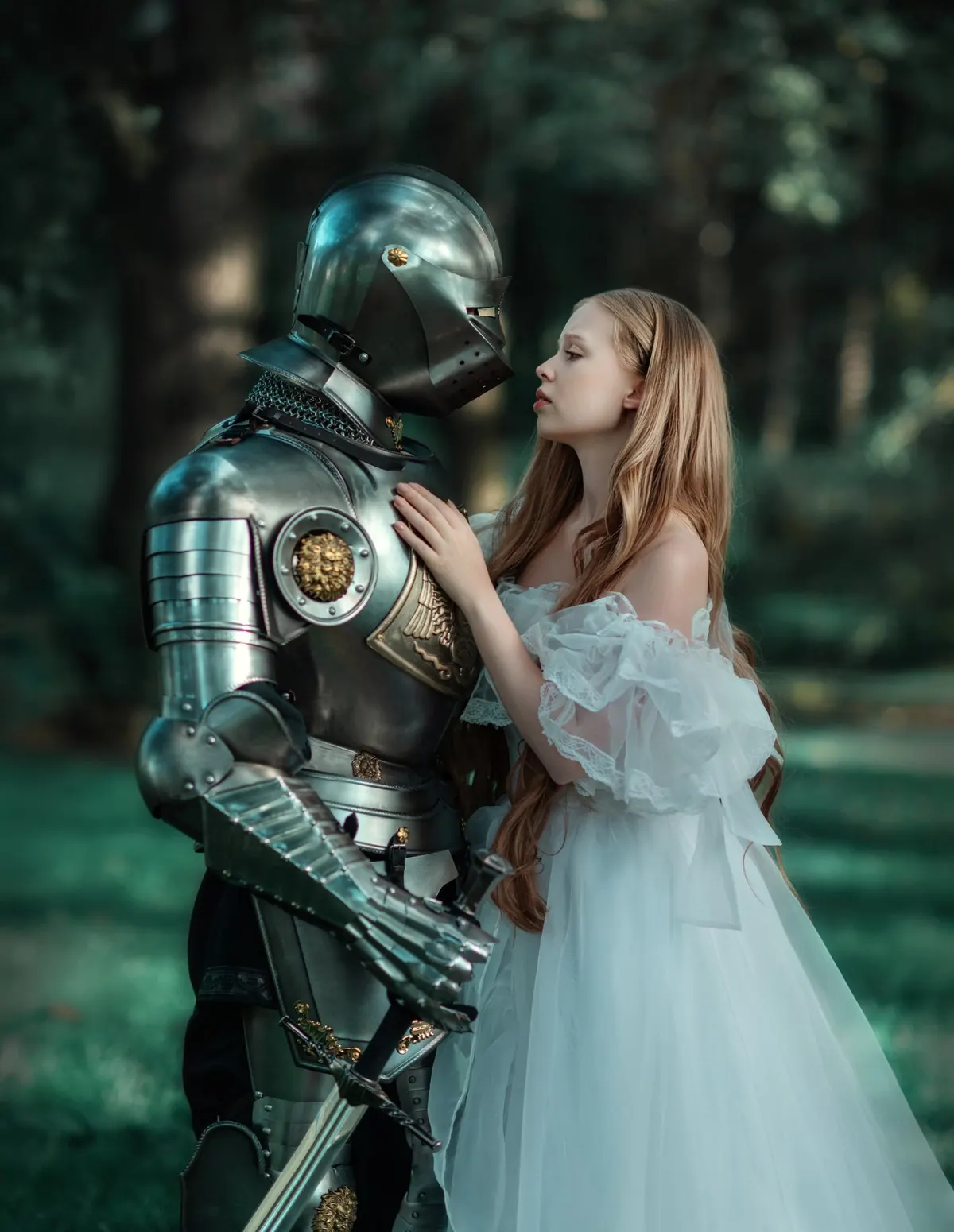
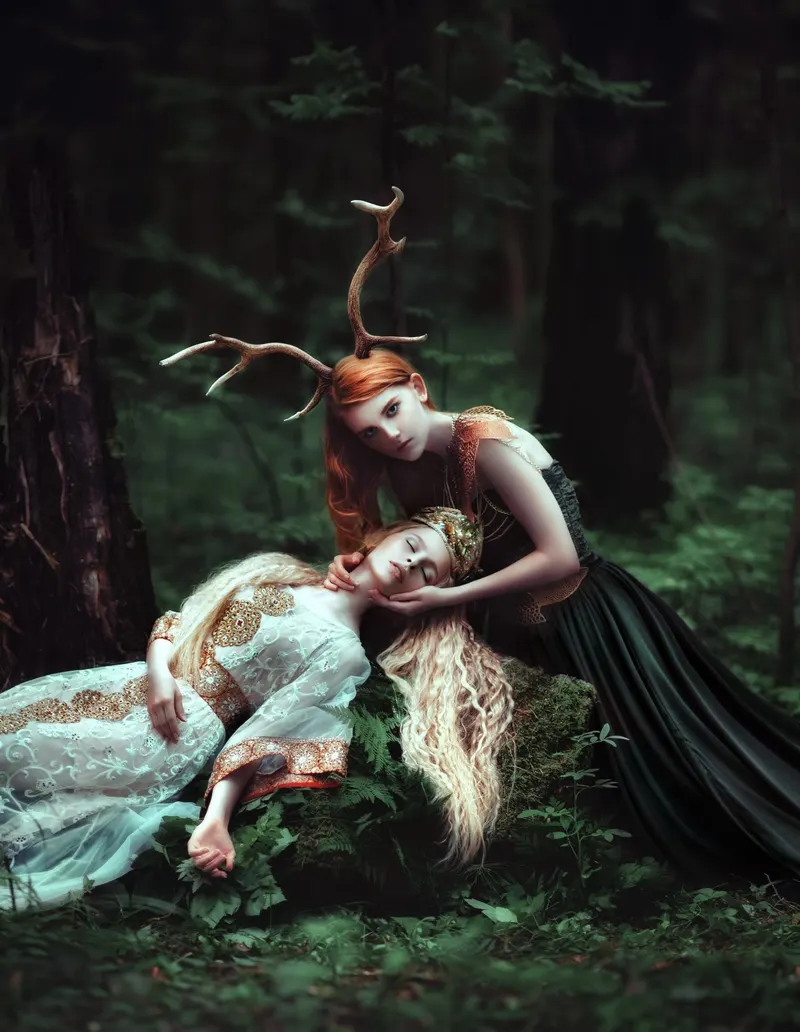
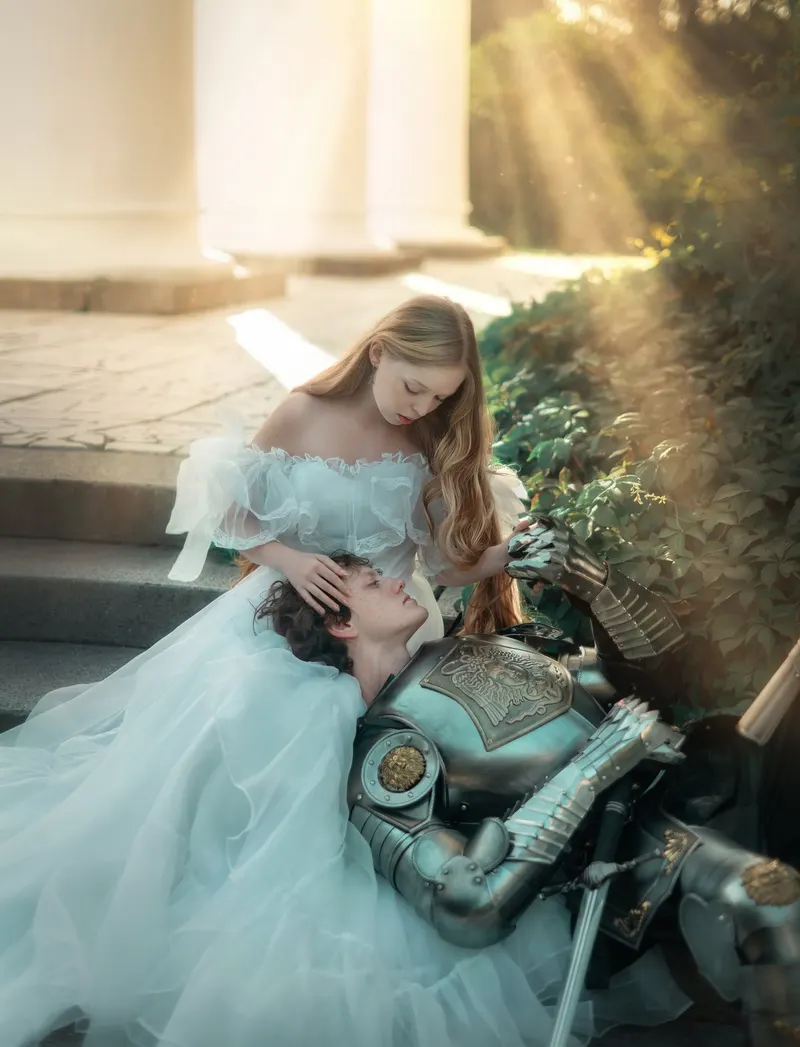
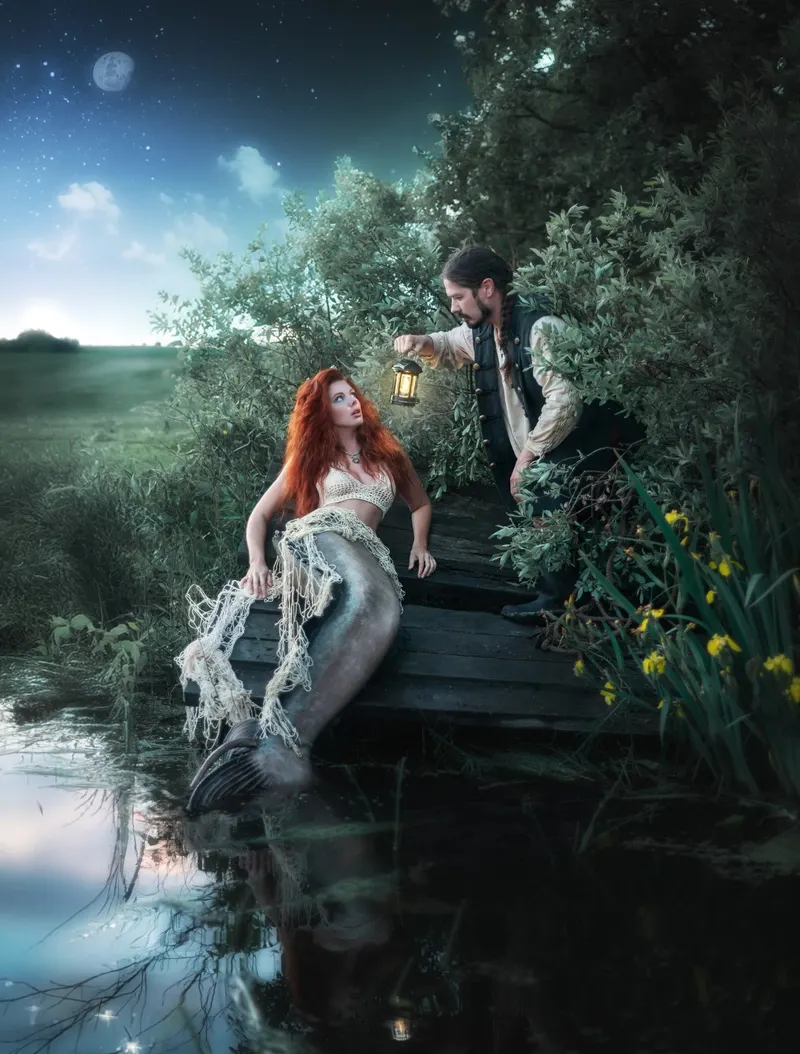
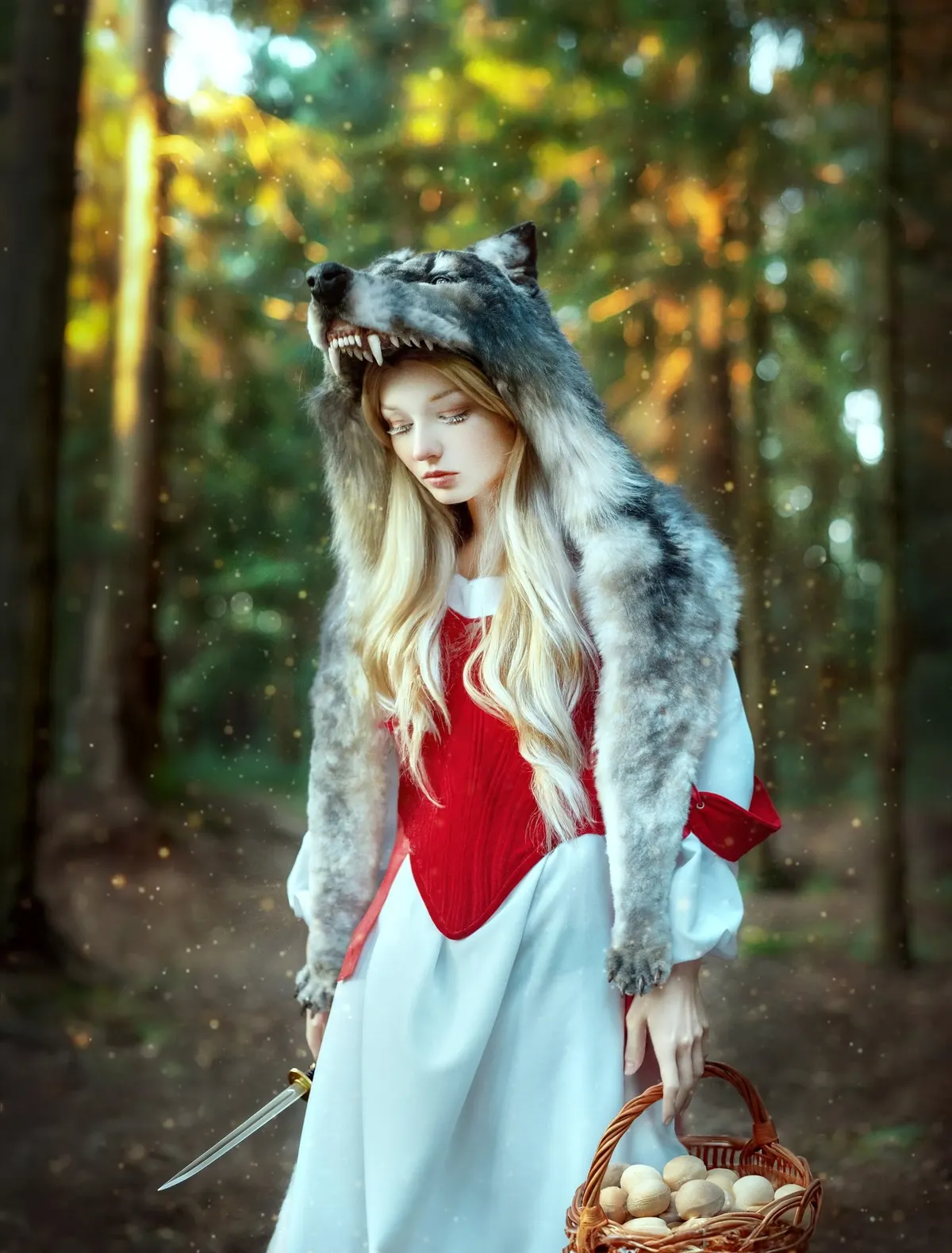
My photographs have stories with a direct conflict of meaning too. Again, this doesn't have to be a battle: it's the presence of two opposites in one frame, and whether they fight or come together is up to the author. A mermaid and her natural enemies, the fishermen. Little Red Riding Hood and the Big Bad Wolf. A fearsome warrior in armour and a gentle princess in a white dress. A detective and a woman suspected of a crime.
The mermaid and her natural enemies, the fishermenA warrior in armour and a princess in white: will it be a fight or love?
All of these are conflicts of meaning, and opposites in one frame always catch the viewer's eye. What will happen between them? A fight, or the love of opposites?
2. Colour conflict
This means using colours that sit opposite each other on Itten's colour wheel, the complementary pairs: warm yellow and cold blue-violet, red and green, yellow and purple. Find Itten's colour wheel online, draw a straight line through the centre, and you'll find the complementary shade for any colour.
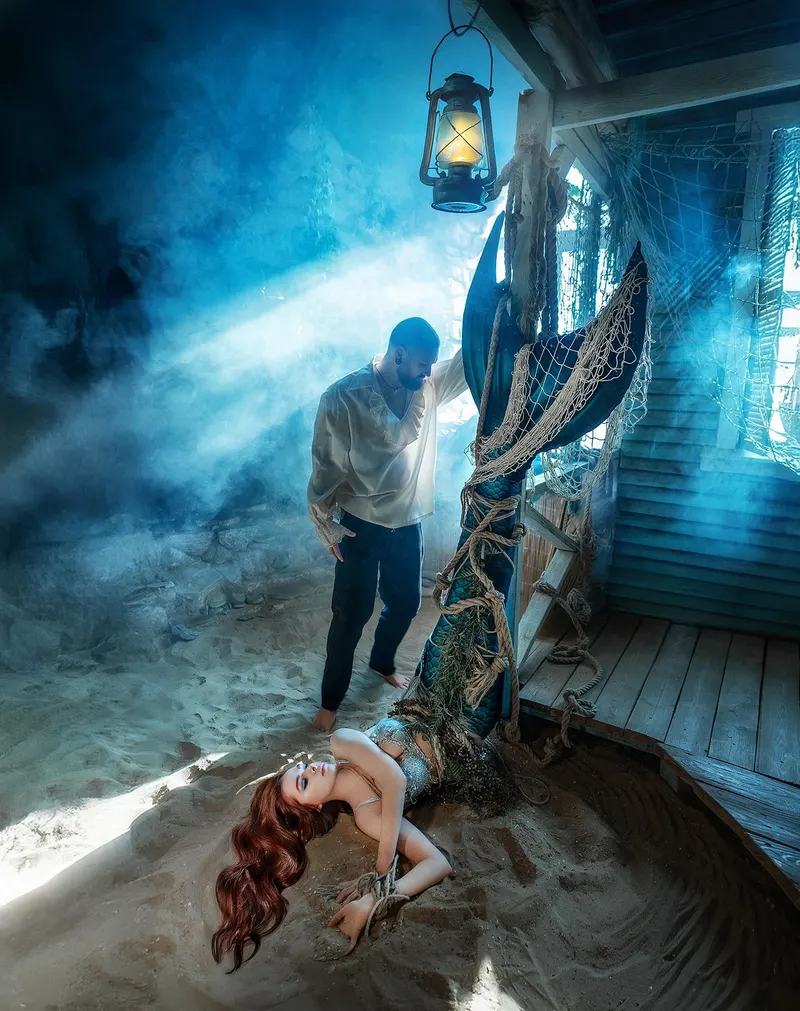
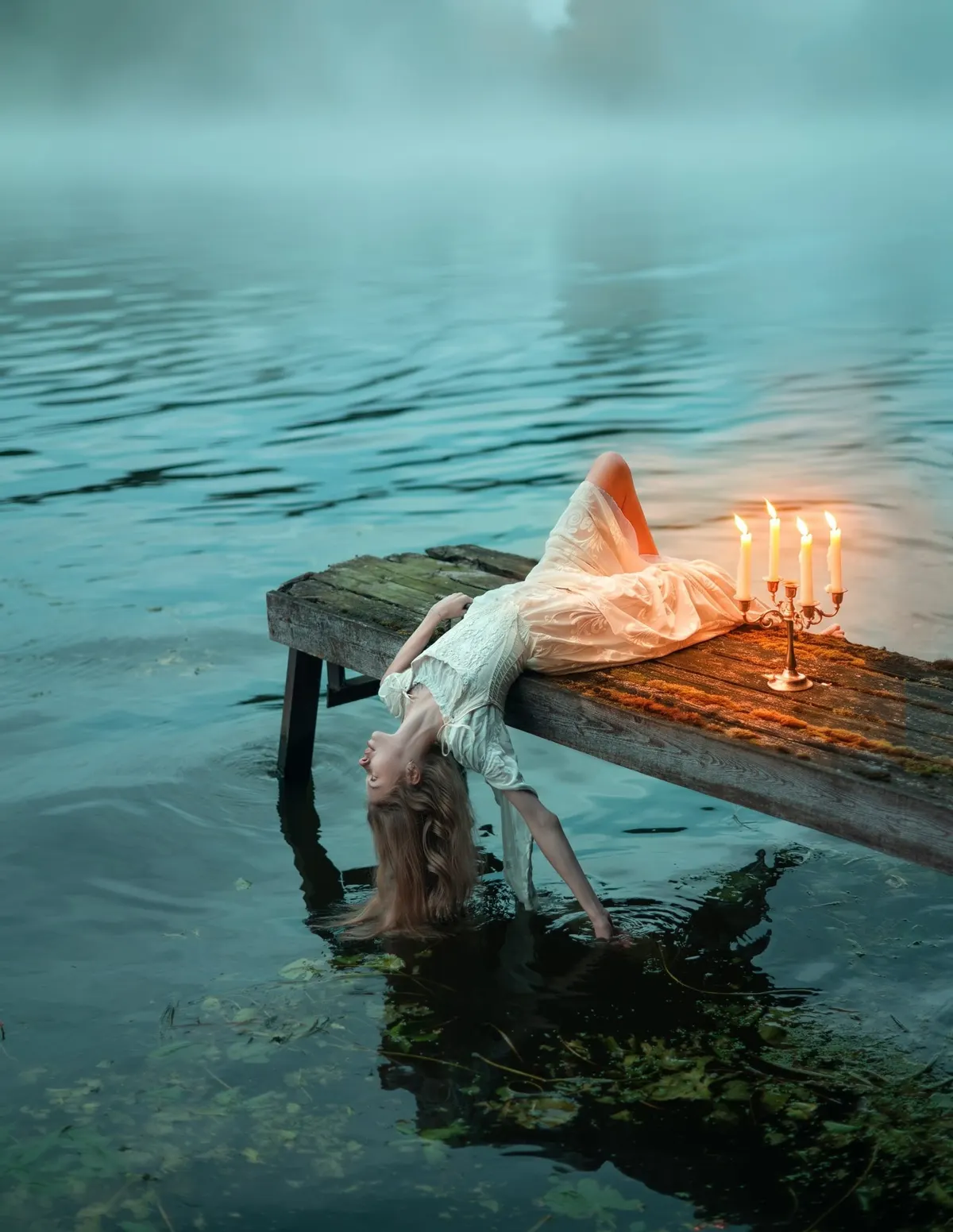
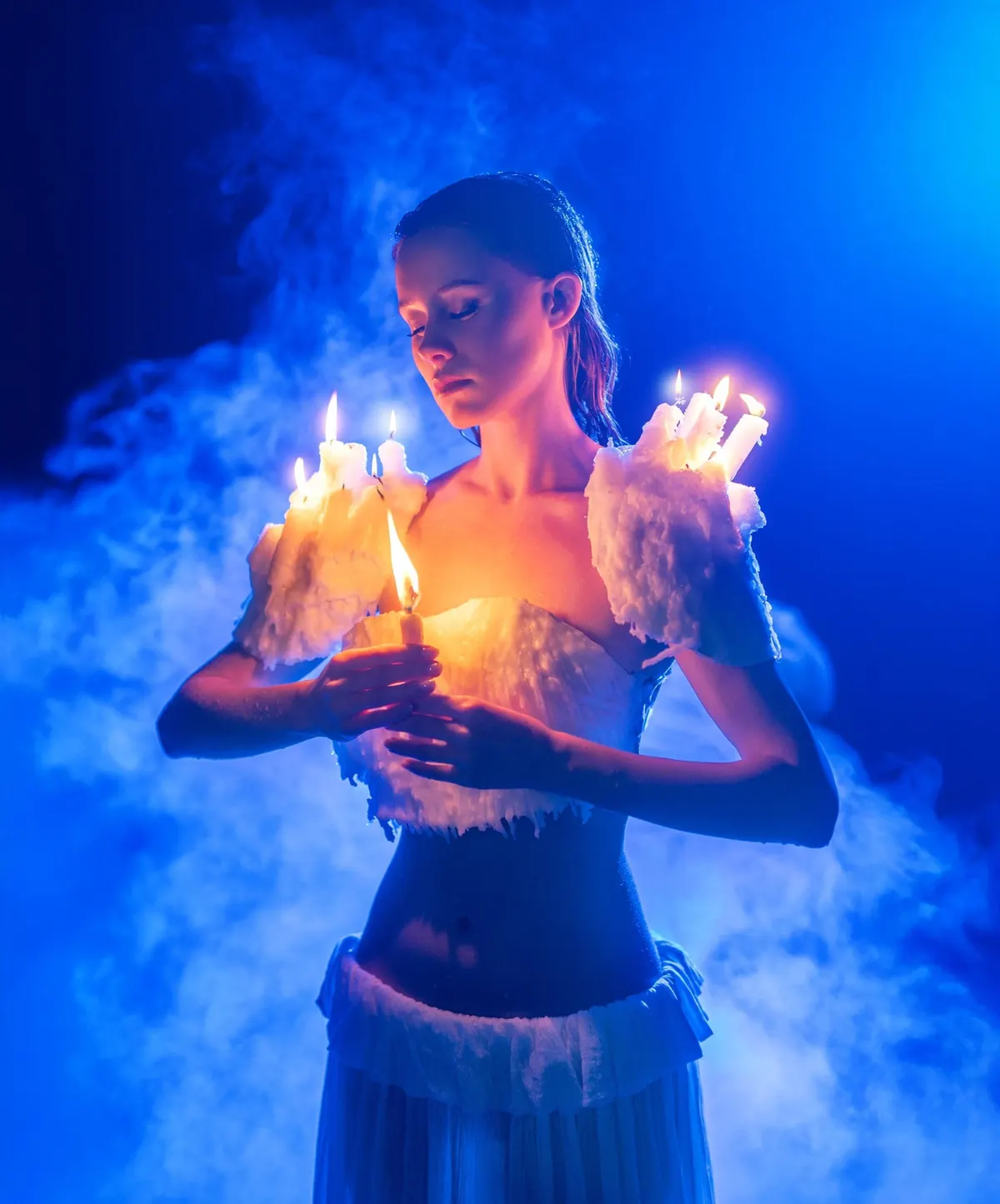
In my photographs I often use the teal and orange technique. I light the model with a very warm yellow or orange light, then shift the white balance towards cooler, greenish tones, in camera or in post-processing. The model stays warm, and the background goes into blue and cyan. That colour contrast pulls the eye: one of my latest series made this way already has more than 500,000 views.
Teal and orange: warm candlelight against the cold waterOrange fire against blue smoke
3. Conflict between the model and the background
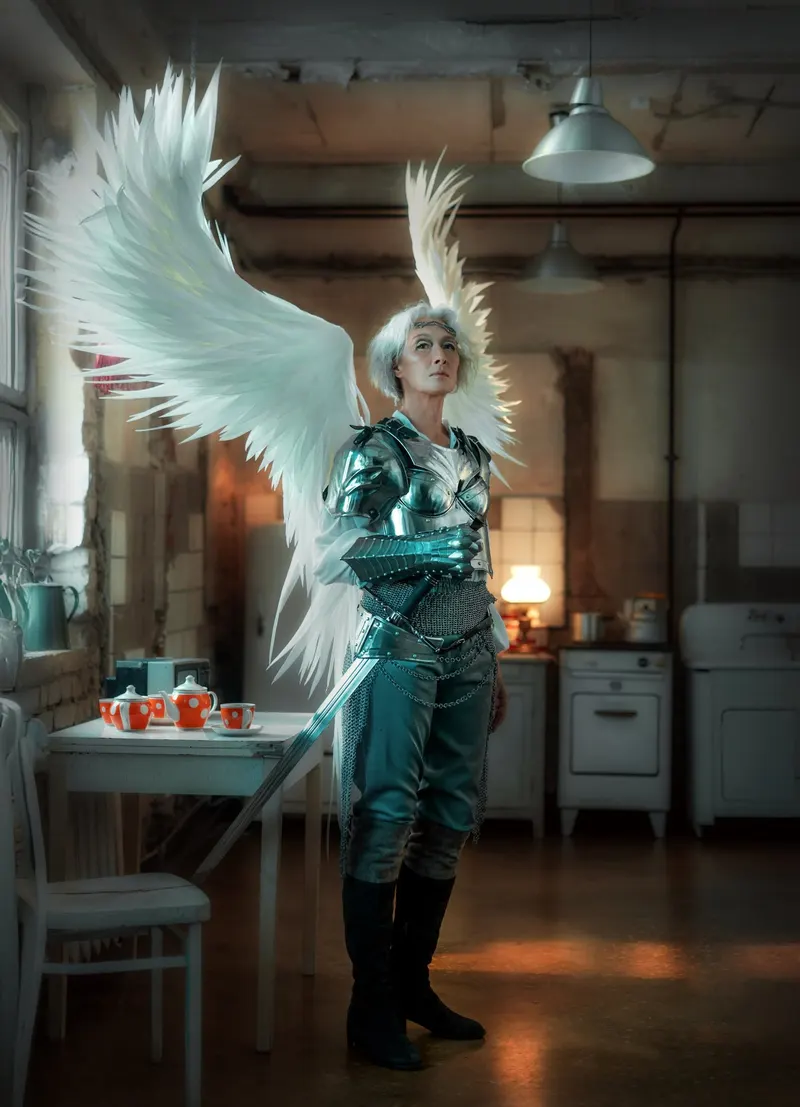
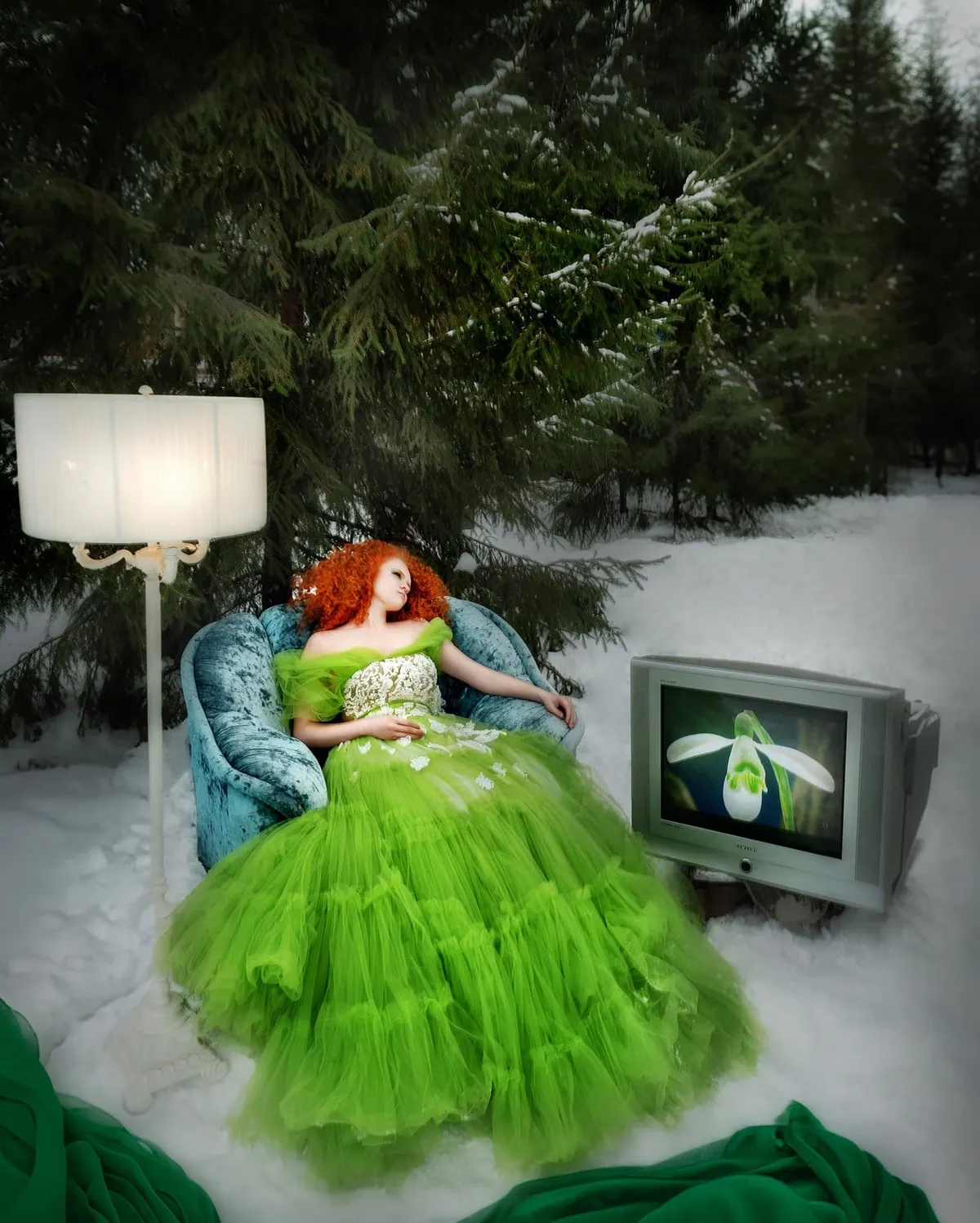
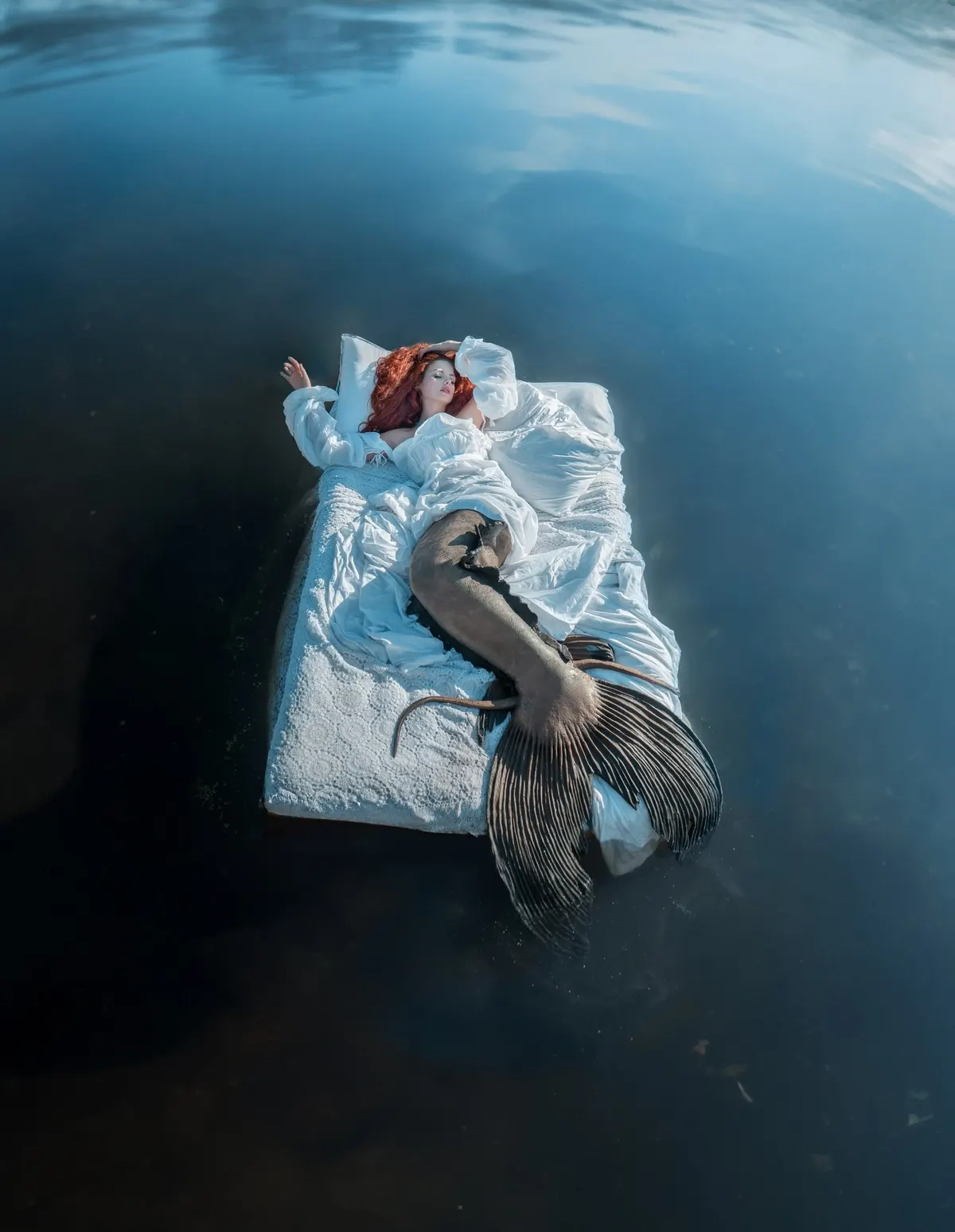
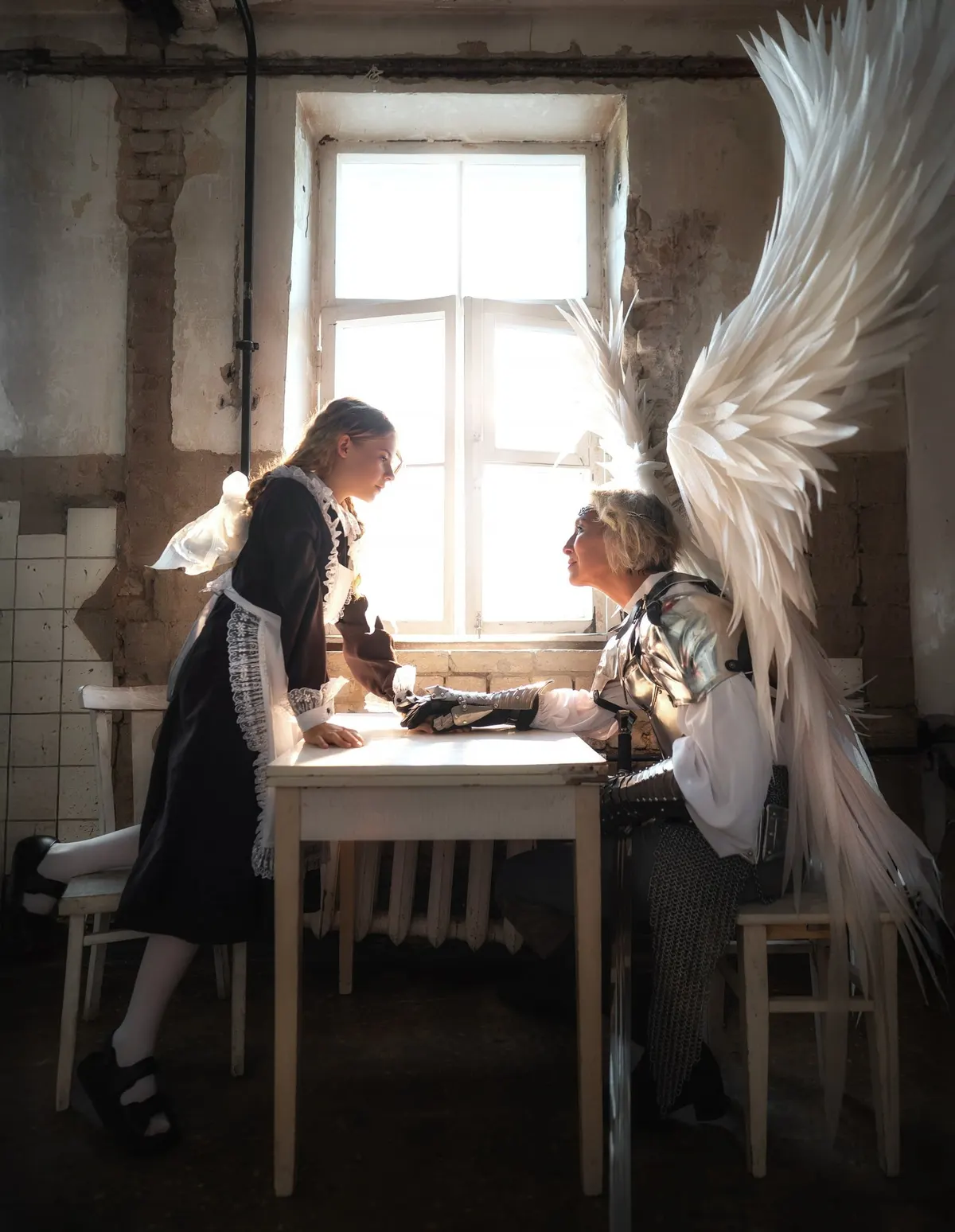
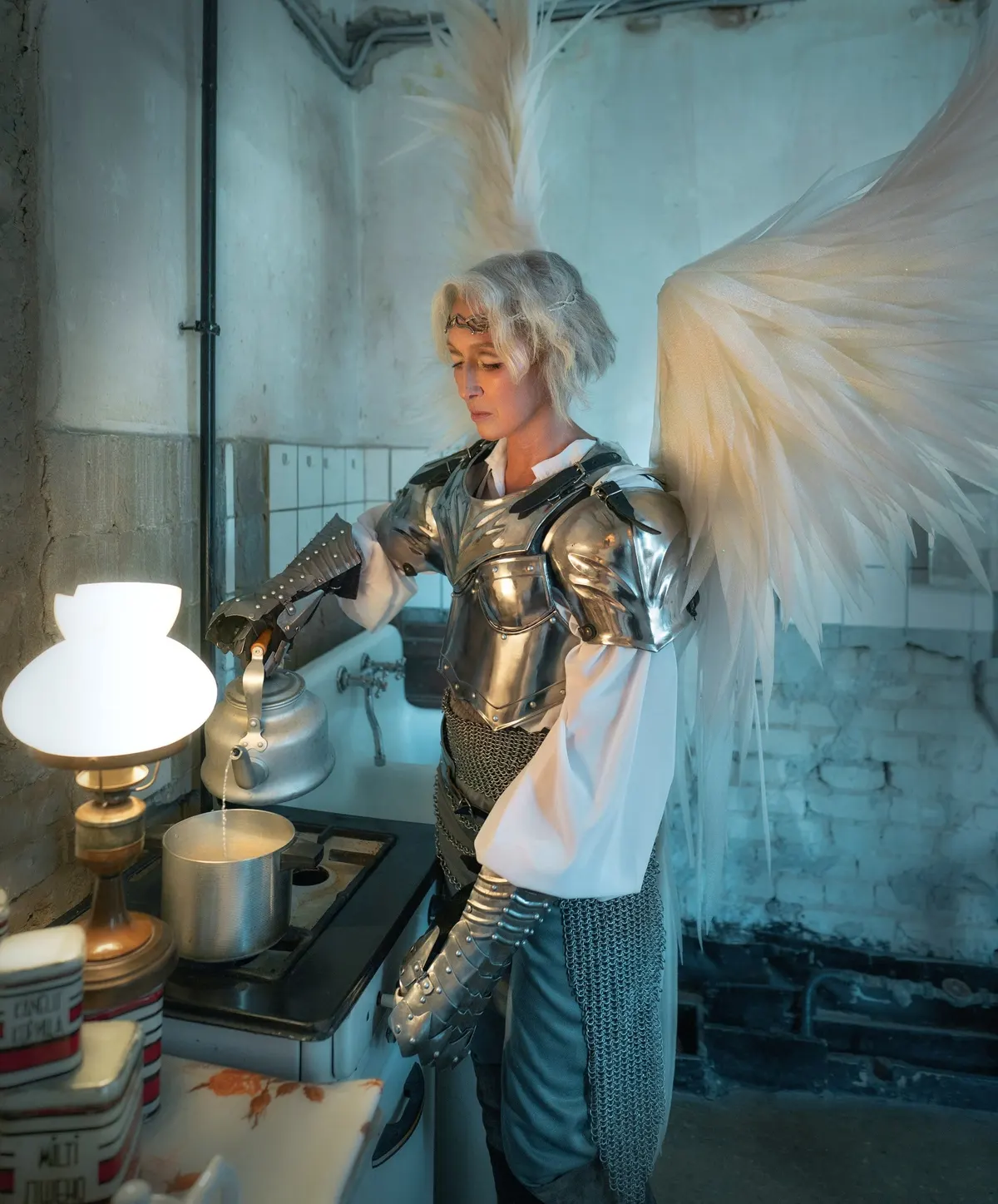
Most often this is a conflict of time (a girl in an antique ball gown in a modern metro station) or of culture (a luxurious evening look with rhinestones and feathers next to rubbish bins). Among my photographs there is a demoness in the metro, an angel cooking soup in a shabby Soviet kitchen, a girl asleep in a bed in the middle of a dark forest, and a girl in a revealing costume in the middle of a cold winter.
A summer ball gown in the middle of winterA bed where no bed should be
4. Other conflicts
There are other kinds of conflict in photography that I use less often, because they suit other genres better: reportage, fashion, street, social, wedding and children's photography. Light against shadow, which is contrast. Textures against each other, smooth and rough. Size, something very small against something huge. Movement, a person standing still among people running.
Two stories built on conflict
To finish, I want to tell you about two of my video stories built on conflict. Both are reels on my Instagram, @maria_lipina; here you'll see frames from the same shoots.
Little Red Riding Hood and the Wolf
The first is a short video story, a reel, about Little Red Riding Hood and the Wolf. At first I show my characters in their "usual" look, the one viewers recognise instantly and that underlines who they are. From the very first frames I'm telling the viewer: look, this little girl in the red cape stands out so brightly in the gloomy forest, she's frightened, she's running, and the model's emotions underline how defenceless she is. The Wolf is calm, slow, dressed in dark grey: her opposite in everything, from emotion to colour.
Then the unexpected happens. Instead of running away, our "victim" kisses her antagonist, the camera circles around them, for a second the viewer loses sight of the characters, and now the fragile girl is adjusting the wolf skin on her head while the Wolf notices, surprised, the bright scarlet cape on his own shoulders. I borrowed the idea of swapping costumes, the kiss and the camera circling the characters from Limp Bizkit's legendary video for "Behind Blue Eyes" (do watch it).
And so our victim turns out to be the predator: a conflict again, now reversed. A conflict of meaning (the Wolf and his prey), of movement (she runs through a frozen, motionless forest while he is calm and almost still) and of colour (the red cape and the grey wolf skin), an unexpected swap of roles and a dramatic ending. All in a 40-second reel.
From the Little Red Riding Hood shoot: the victim turns out to be the predator
The Guardian Angel
The second story is a conflict between youth and maturity, the fragility of childhood and the strength of experience, shown not only as opposition but also as a union of the characters.
The heroine is a little schoolgirl. At the start of the video she stands against the "grown-ups": they scold her for being disobedient, for bad marks, for being different from the others. She gets upset and runs home, and the memories follow her. This part is told through sound: we see only the little heroine, and the hostile adult world is a crowd of voices telling her off.
Then the second heroine appears, an older woman (a mother or a grandmother, as an image), who protects the child from every trouble. Her role as protector and guardian angel is shown literally: the woman turns into a winged angel in shining armour who shields her little one from her problems.
From the Guardian Angel shoot: an angel in armour holds out a hand to a girl in a brown school uniformAn angel against a shabby Soviet kitchen
The conflict between the model and the background works beautifully here as well: an angel in a shabby Soviet kitchen, holding out a hand in a plate-armour gauntlet to a little girl in a brown school uniform. And the contrast of strong backlight makes the picture even more expressive.
Friends, bring different kinds of conflict into your work: opposition, struggle, the meeting of opposites. This technique, common to every art form, will make your pictures more expressive and more interesting.

Comments
Sign in to join the conversation.
No comments yet. Be the first.