Artells Media

Raisins, Almonds, and a Quiet Offering

A

By a community author · November 4, 2026

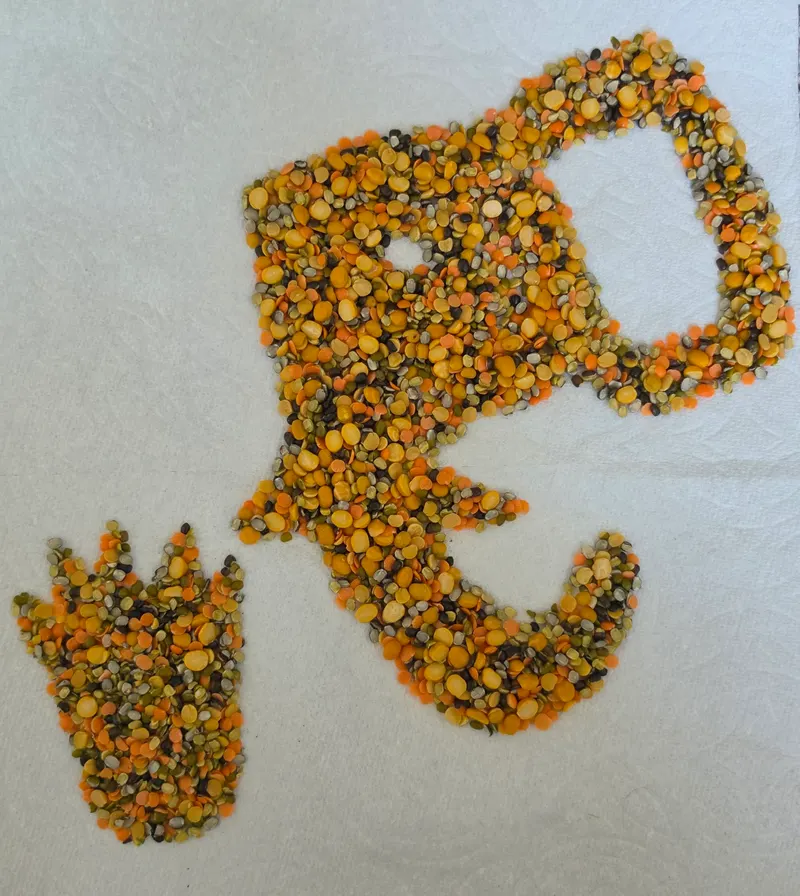
Raisins, Almonds, and a Quiet Offering, photo 1

In shortShounak arranges raw almonds, cashews and raisins into the likeness of Lord Ganesha, showing how sacred art can grow from ordinary pantry ingredients and quiet attention.

I did not set out to make religious art. I set out to make something out of what was left in my pantry.

One afternoon, I found myself looking at a handful of raw almonds, a few cashews, and a small pile of black raisins. Without a plan, I began to move them around on the table. Almost instinctively, the curve of a cashew became the tusk of Lord Ganesha. The smooth bend of an almond became an ear. The dark raisin became the eye.

It was a playful moment, but it felt profound. In Hindu tradition, these exact ingredients—nuts and dried fruit are often offered as prasad, blessed food given to devotees. By arranging them into the likeness of the deity who removes obstacles, the boundary between the spiritual and the domestic disappeared. The kitchen counter became an altar.
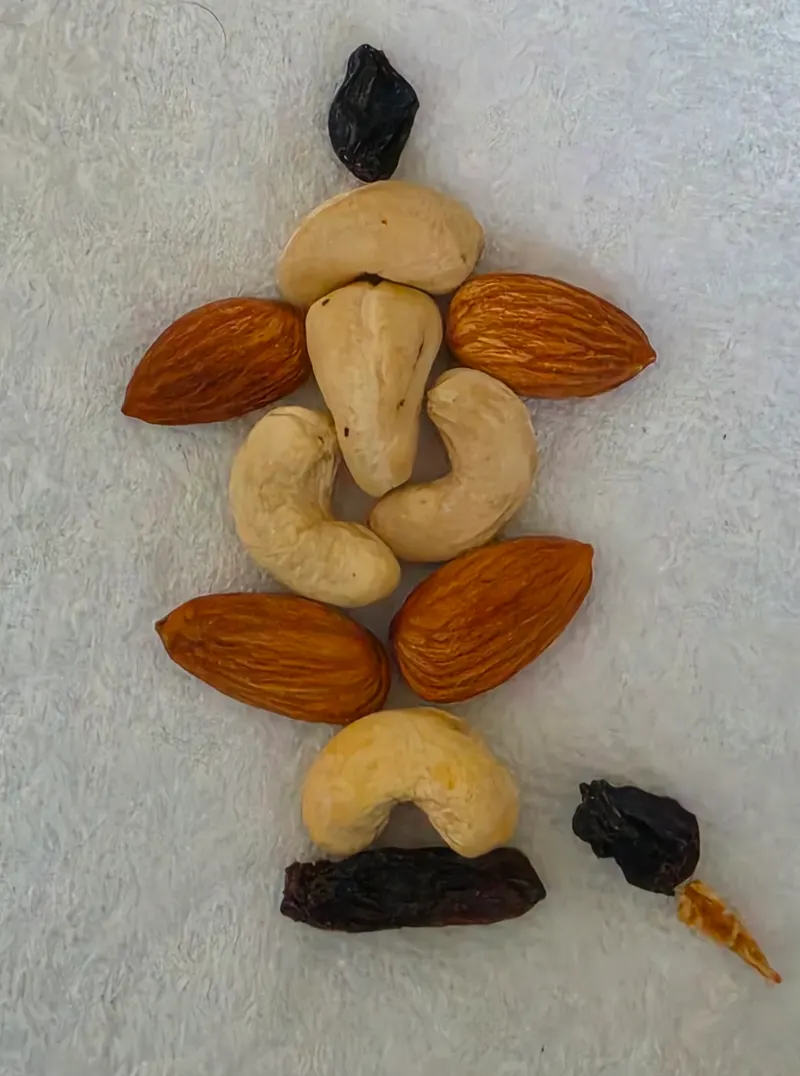

Raisins, Almonds, and a Quiet Offering, photo 2

This series, "Alimentary Iconography: The Domestic Sacred," is an ongoing meditation on that moment. It asks us to consider where the divine actually lives. Is it only in temples and rituals, or can it be found in the quiet, mindful arrangement of the food we eat every day?

Working with raw, unprocessed ingredients forces a kind of restraint. There is no paint, no clay, and no expensive materials only texture, color, and geometry. It is a reminder that creativity does not require abundance; it only requires attention.

Each piece in this series is built on the same simple premise: that the ordinary is already extraordinary, if we take the time to arrange it with reverence.

Quick answers

What materials does Shounak use to create this religious art?
Shounak uses only raw, unprocessed ingredients such as almonds, cashews and black raisins, with no paint, clay or other materials involved.
Why are nuts and dried fruit significant in Hindu tradition?
In Hindu tradition nuts and dried fruit are often offered as prasad, blessed food given to devotees, which is why Shounak chose them to form the image of Ganesha.
What is the name of this ongoing series?
The series is called Alimentary Iconography: The Domestic Sacred, an ongoing meditation on finding the divine in everyday domestic moments.
What idea does Shounak want viewers to take from this work?
Shounak wants viewers to consider that the divine is not limited to temples and rituals but can be found in the mindful, reverent arrangement of everyday food.

Read next

Comments

Sign in to join the conversation.

No comments yet. Be the first.

Got a story of your own?

Every creator we publish has one. Write yours for the Community, or go straight for a printed feature.

Raisins, Almonds, and a Quiet Offering · Artells Media