RED DUST was born from the intention to merge two seemingly opposing worlds: the rawness of the Western and the sensuality of boudoir photography. The idea began with the search for an image that conveyed strength, mystery, and feminine confidence, while also maintaining an elegant, dark, and cinematic aesthetic.
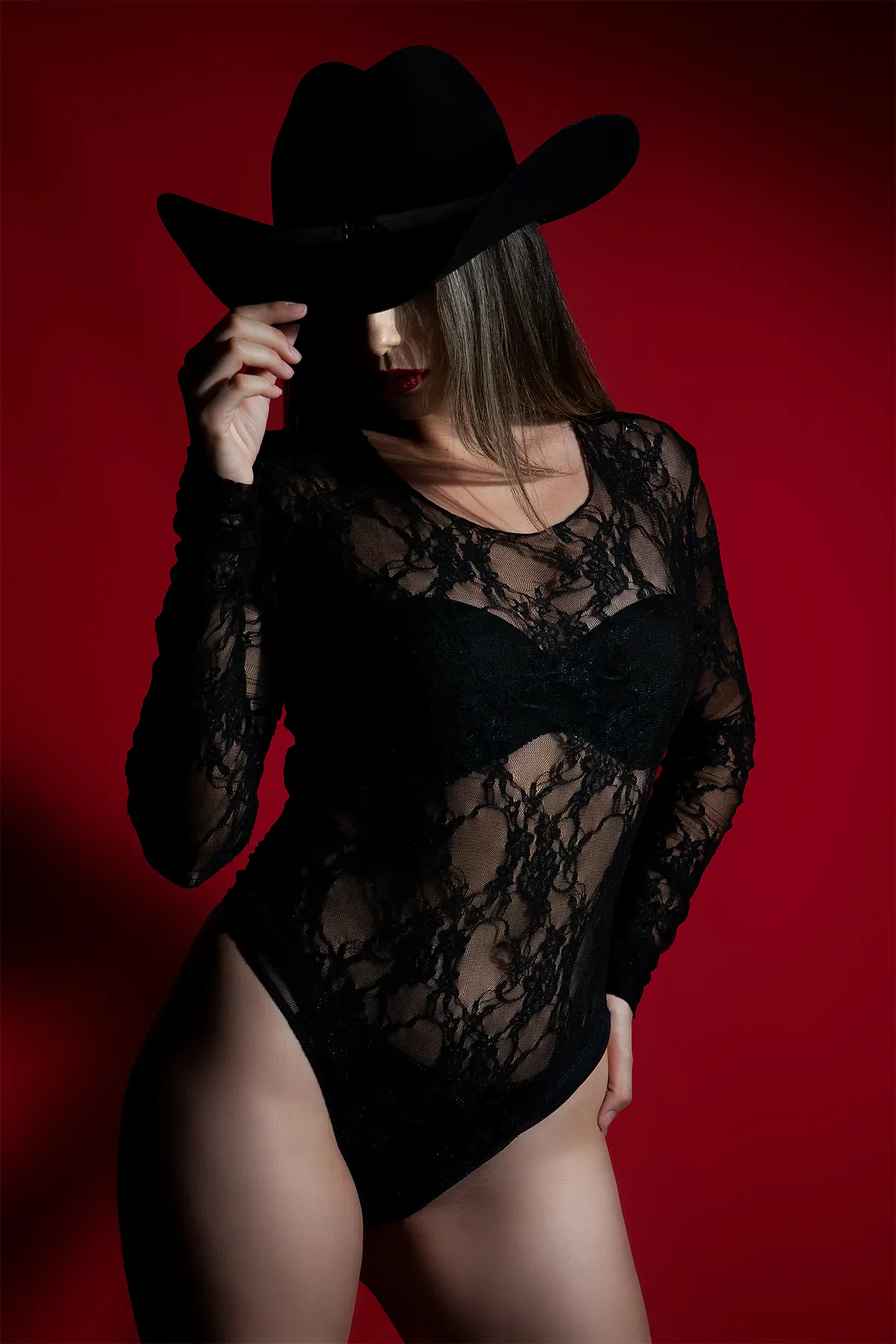
The starting point was to imagine a woman who didn't need to fully reveal her face to capture attention. An enigmatic figure, protected by a black cowboy hat, dressed in lace, and surrounded by a red atmosphere that evoked the desert heat, the sunsets of the Comarca Lagunera region, and the dust raised by the wind.
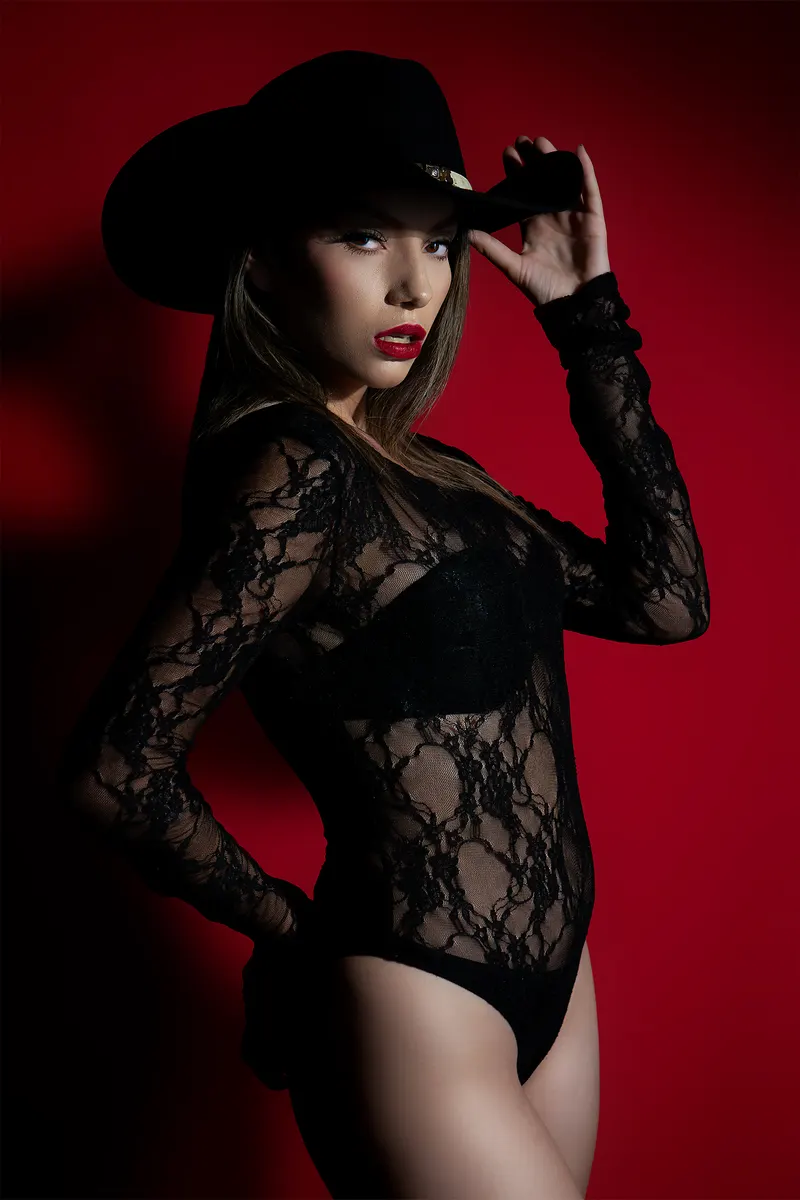
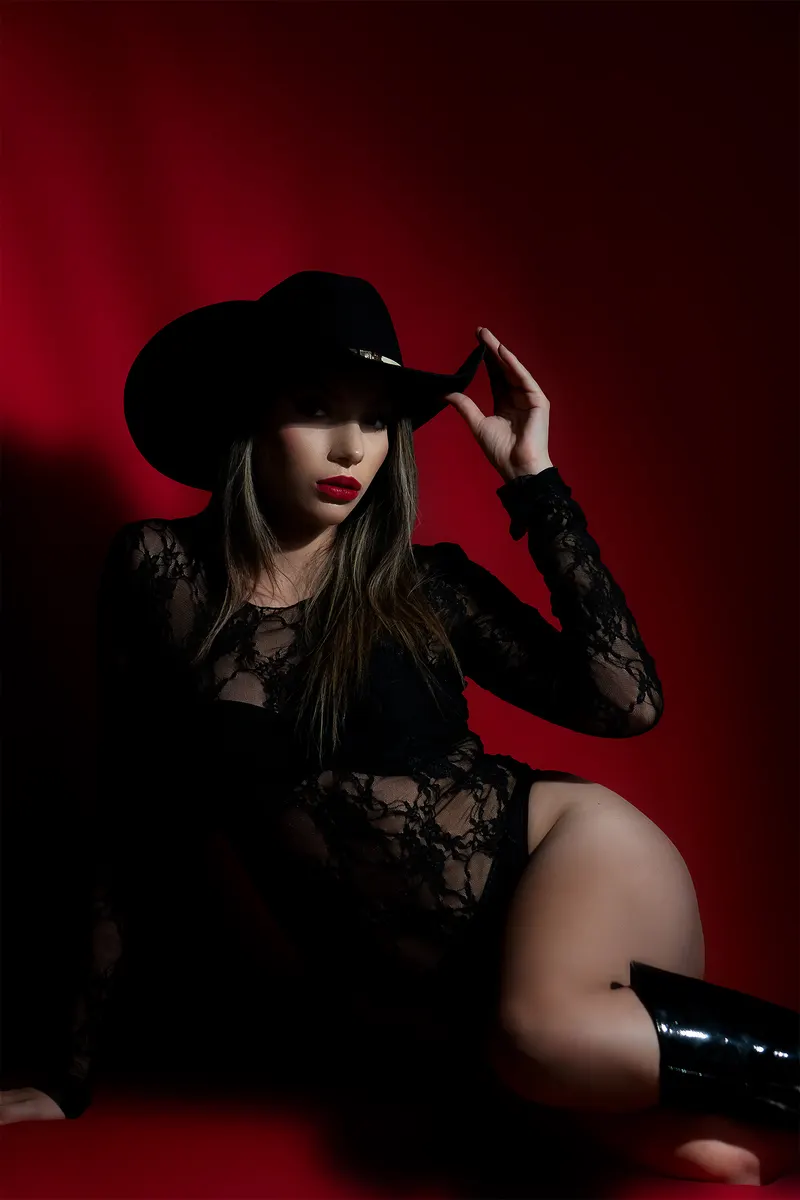
Red became the heart of the concept. More than just a visual background, it represents the passion, desire, danger, and intensity of a personality unafraid to claim its own space. Opposite it, black functions as a symbol of mystery, elegance, and power. The combination of these two colors creates a visual tension between light and darkness, between what is revealed and what remains hidden.
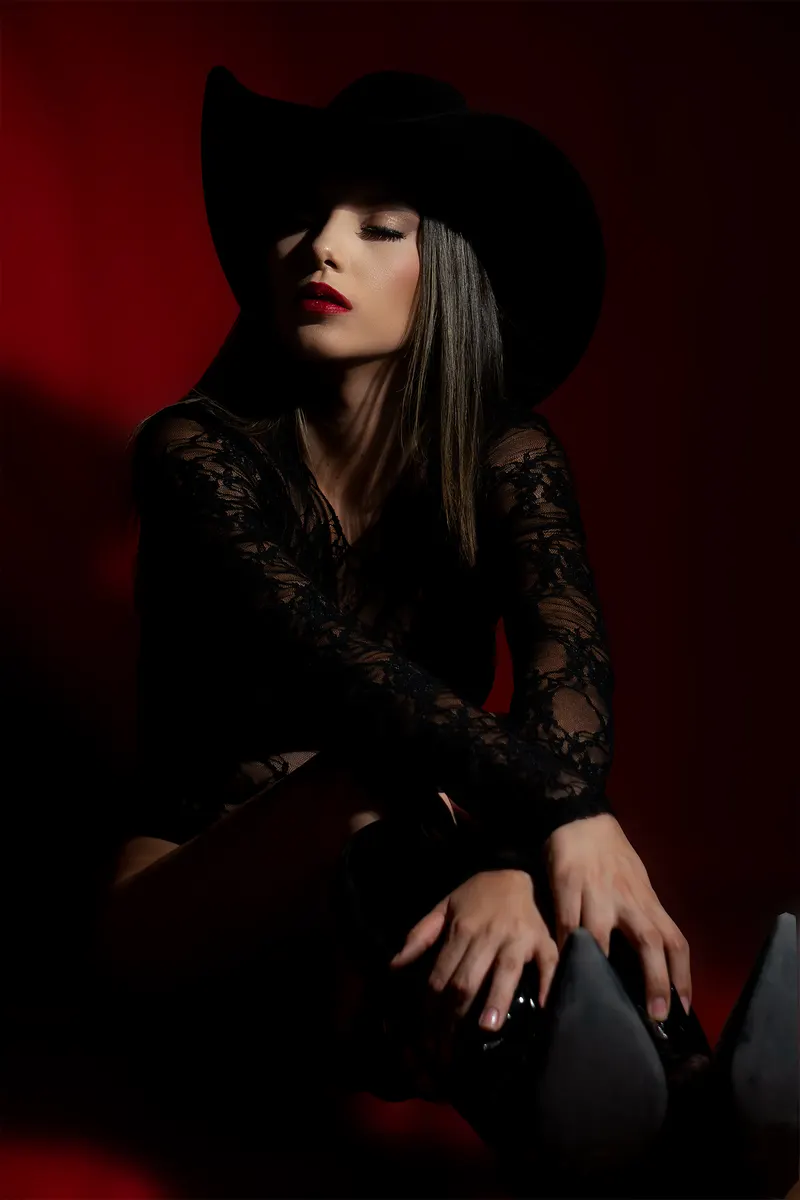
The choice of wardrobe stemmed from a desire to move away from the traditional representation of cowboy aesthetics. The hat ceases to be merely a characteristic element of the Western and becomes a narrative tool: it conceals the gaze, generates intrigue, and allows the viewer to fill in what the image chooses not to show. Meanwhile, the black lace introduces boudoir aesthetics, adding delicacy, texture, and sensuality without sacrificing the character's strength.
The lighting was fundamental in creating this atmosphere. Deep shadows, stark contrasts, and light directed at the body and face allow the figure to emerge from the red background as if she belonged to a scene suspended in time. The intention was not to illuminate everything, but to carefully select which parts of the image should be revealed and which should remain in shadow.
From this combination, the shoot began to acquire its own identity: a woman inhabiting an imaginary territory where the freedom of the Western, the intimacy of the boudoir, and the aesthetics of a fashion editorial coexist. It's not about literally representing a cowgirl, but about reinterpreting her imagery from a contemporary, feminine, and cinematic perspective.

Comments
Sign in to join the conversation.
No comments yet. Be the first.