Picture the scene. The editors say yes, your series is scheduled for next month's issue, and then a short email arrives asking for a copy of the model release. You open your phone and find a voice message from March that says "sure, post it wherever!" and a thumbs-up emoji. Lovely energy. Very little paper.
This guide exists so that moment never happens to you. One honest note first: this is an editor's practical guide, and it is not legal advice. Image and privacy law changes from country to country, so for anything high-stakes a local lawyer is worth the fee.
What a model release is
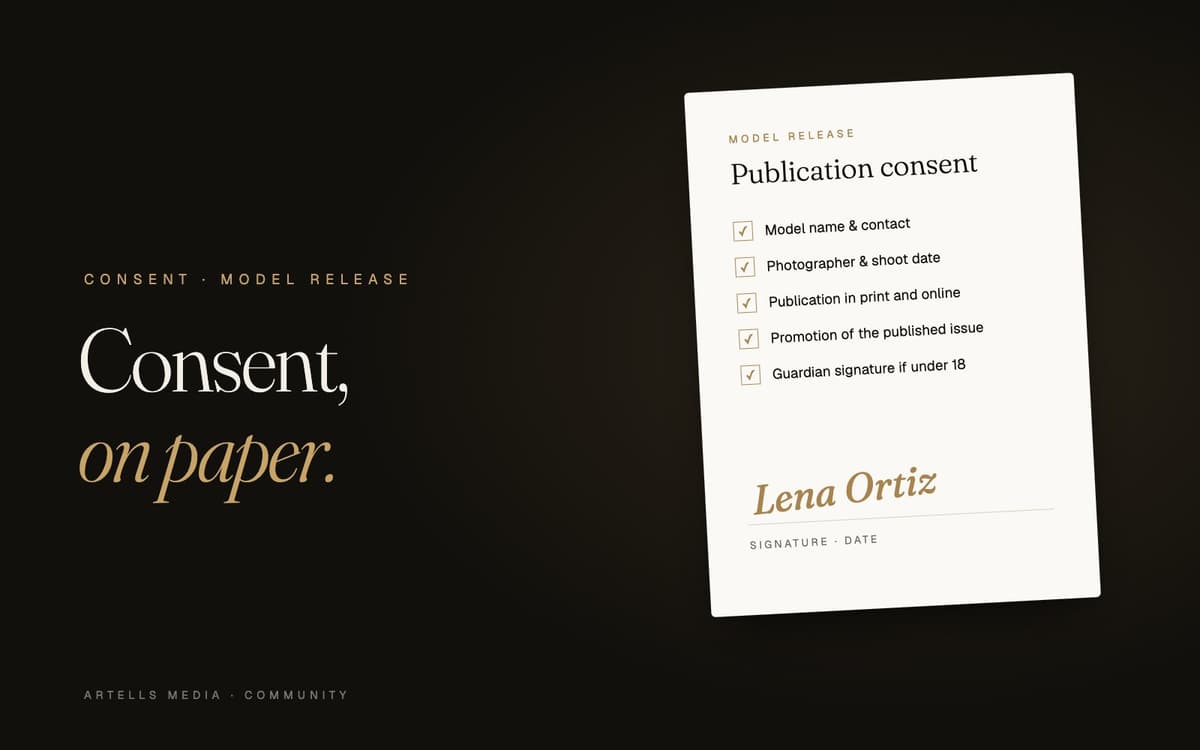
A model release is a written agreement in which a person who appears in your photographs allows those images to be used, within the limits it describes. The model signs it (or a parent or guardian, for a minor), and it names the photographer, the shoot and the agreed uses.
Keep two things apart. Copyright in the photograph usually belongs to the photographer. The release covers the person in it and their rights over their own likeness. A magazine needs both answered.
Do I need a model release to publish in a magazine?
Editorial vs commercial use
Many legal systems draw a line between commercial and editorial use. Commercial use means advertising, selling a product or implying an endorsement, and it almost always requires a signed release. In New York, for example, using someone's portrait "for advertising purposes or for the purposes of trade" without written consent is prohibited by statute. Editorial use (news, commentary, art, magazine stories) is treated more gently in the United States, which is why image libraries often license editorial images without releases.
That is where many photographers stop reading, and that is where the trouble starts.
Why "editorial" rarely means "no release needed"
- Countries differ. France protects a person's right to their own image under Article 9 of the Civil Code. Germany's Art Copyright Act requires consent before a portrait is published, with defined exceptions. In a Quebec case, Aubry v. Éditions Vice-Versa (1998), the Supreme Court of Canada held that publishing a candid photo of a teenager in an arts magazine without her consent violated her right to her image. Our magazines ship to 189 countries, so "it's fine where I live" is a thin shield.
- Fashion editorials are staged collaborations. Public-interest arguments protect the photo of a minister at a press conference. They fit much less comfortably around a beauty story with a model you cast, styled and directed.
- Magazine use rarely stops at the printed page, and magazines set their own rules anyway.
So the short answer to "do I need a model release to publish?" is: for a magazine submission, plan on yes.
Every magazine page on Artells Media says it plainly: "You must own the copyright and have releases from everyone recognizable in the frame." In the Submission Rules you confirm "You have obtained publication permission from the models or their representatives" and agree to indemnify the publisher if third-party rights are breached. The FAQ and the Awards terms agree: every recognisable person needs a release.
One more thing worth knowing before the shoot. A magazine rarely uses a published story only on paper: it also appears on the website and social media, in short videos about the issue and in the issue's promotion (the Submission Rules list every use, including videos made from the photos with AI tools). A release that says "one print magazine only" would leave you short, so ask for one that covers print, digital and the promotion of the publication. Most models expect exactly that for editorial work.
Models under 18
The Teen & Kids rules are strict, and they should be: "Every person under 18 in a series needs a written release signed by a parent or legal guardian, covering both the shoot and the publication. Keep it: the editors may ask for a copy before publication and decline the series without it."
The same rules exclude nudity, implied nudity, lingerie or swimwear styling and anything sexualised for anyone under 18, list the guardian's contact in the credits, and ask you to confirm in the form that you hold a signed release for every minor shown. One tip: 18 is the age of majority in most places, but a few US states and Canadian provinces set it at 19 or 21. If in doubt, get the guardian's signature too.
What happens if consent is missing
A series without the required releases can be declined (for minors the rules say so in as many words). Content you have no right to publish breaks our Terms and is removed, and serious or repeated violations can restrict an account. Because of the indemnity, the cost of a rights claim would land with you.
And print cannot be unprinted. A web page can come down in an afternoon; an issue on someone's coffee table stays there.
What a good release includes
We won't hand you a legal template (that really is a lawyer's job), but most solid releases contain the same building blocks:
- The parties: names and contacts of the model and the photographer.
- The shoot: date, place and a short description of which images are covered.
- Permitted uses: print and digital publication, the publisher's promotion, portfolio, competitions, social media.
- Territory and duration: worldwide and unlimited is common for editorial work; write down any limits.
- Consideration: a fee, or images in exchange on a TFP shoot.
- Retouching and credit: that normal editing is allowed, and how the model wants to be named.
- Restrictions: anything the model refuses, such as sensitive contexts.
- Age confirmation, guardian block, signatures and date.
TFP shoots: the most common blind spot
TFP (time for prints, or time for portfolio) means nobody is paid in money: everyone gives their time and gets the images. A popular myth says that a TFP shoot means everyone can use the photos anywhere. Many TFP agreements cover portfolios and social media only, and say nothing about magazines.
If you hope to submit the series, say so before the shoot and put it in the agreement. It costs one sentence and saves one awkward conversation. It works the other way too: our rules require that models have the photographer's (or a representative's) consent for publication, so if a model or makeup artist submits, the copyright holder must agree. And collect everyone's names, social accounts and emails: submissions without team credits are not accepted.
Agency-represented models
A model signed with an agency usually cannot give every permission alone. Agency contracts commonly require the agency's approval for shoots and usage, tests included. The rules reflect this: permission can come "from the models or their representatives".
The simple routine: tell the booker in writing that the shoot is intended for magazine submission, and keep the reply alongside the model's signed release. Agencies tend to like this kind of request, because editorial pages turn into tear sheets for the model's book.
Property and location releases
People are only half of the frame. Our Terms ask you to confirm that the "required model and property releases exist", and property is wider than it sounds: a private home, a rented studio, a recognisable artwork or sculpture. A short email from the owner ("yes, you may shoot here and publish the images in magazines") often covers a location. For an artwork that dominates the frame, ask the artist. Rules on photographing buildings and public art vary by country.
Digital signatures
You don't need a fountain pen. In the United States the ESIGN Act, and in the EU the eIDAS Regulation, establish that a signature cannot be denied legal effect just because it is electronic. Release apps and e-signature tools for PDFs work well.
What matters is that the document shows who signed, when, and exactly what they agreed to. A chat message saying "ok!" proves enthusiasm. It proves very little about scope.
Keeping records
Keep one folder per shoot: releases, guardian releases, the agency's written OK, location permissions, the credit list and a contact sheet showing who appears where. Keep it as long as the images are in use, which with print means for good. Releases contain personal data, so store them securely and share copies only when someone has a real reason, like an editor before publication.
A plain-language checklist
- Before the shoot, tell everyone the images may go to magazines.
- Use a release that covers print, digital and promotion.
- Under 18: a parent or guardian signs for the shoot and publication.
- Agency models: written approval from the booker.
- Locations and artworks: permission from the owner.
- Signatures before the first frame, while everyone is fresh and happy.
- Names, emails and social accounts for the credits.
- A release for every recognisable person, background faces included.
- The copyright holder's consent if you are not the photographer.
- One folder you can find in two minutes.
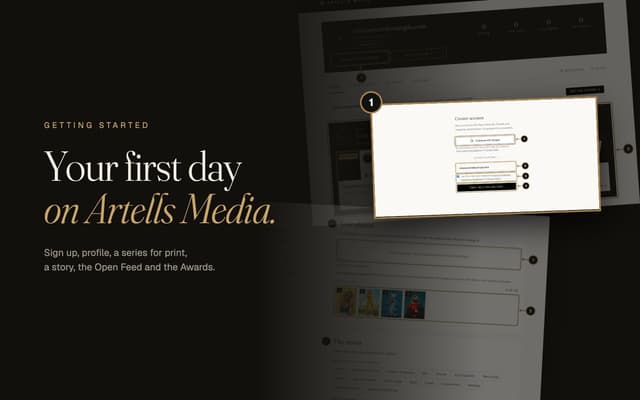
Then pick your magazine and follow the step-by-step submission walk-through. For the creative side of getting accepted, read how to get published in a fashion magazine.
Frequently asked questions
Do I need a model release to publish in a magazine?
For a magazine submission, assume yes. Laws differ by country, and some places allow editorial use without a release, but most magazines still ask for one. At Artells Media every magazine requires a release from everyone recognizable in the frame, and for anyone under 18 a release signed by a parent or legal guardian covering both the shoot and the publication.
Is a model release required for editorial use?
In the United States, editorial use often does not legally require one, while commercial use almost always does. Many other countries, including France and Germany, protect a person's image more strongly, and a magazine distributed internationally meets all of those rules at once. This is general information, not legal advice; ask a local lawyer for your specific case.
Does a TFP agreement count as a model release?
Only if it says so. Many TFP agreements cover portfolio and social media use and stay silent on magazines. If you plan to submit the series, write magazine publication and the publisher's promotion into the agreement before the shoot, and make sure every recognisable person signs it.
Do I need a release for people in the background?
If they are recognisable, yes. Artells Media asks for releases from everyone recognizable in the frame, and that includes the friend holding the reflector who wandered into shot. When a release is impossible to get, choose a different frame, or retouch or crop so the person can no longer be identified.
Can a model release be signed digitally?
Generally, yes. Laws such as the US ESIGN Act and the EU eIDAS Regulation give electronic signatures legal effect. Use a release app or an e-signature tool that records who signed and when, and keep a copy of the signed document. A chat message saying "ok" is weak evidence of what was actually agreed.
Paperwork done, credits collected? Then the difficult part is behind you, and the fun part starts. Choose the title that suits your series among our five magazines and send it in. The editors answer within 7 days, and we'd love to see what you made.
Comments
Sign in to join the conversation.
No comments yet. Be the first.